Amanda V. - She does a great job of giving the history of how the Emergence of Modernism came to be. She also includes the main characteristics of the movement's architectural style and lists some of the main designers of the time. She then goes into further detail of one the most influential designers, Frank Lloyd Wright, and gives a lot of information about his history and career. She also gave very good examples of past and present work.
Angie - This history of Emerging Modernism was a good lead into the career of Walter Gropius. Angie merged them together nicely and gave some great information about Gropius' accomplishments during his career. She also gave really good examples of his designs and modern applications of them.
Saturday, October 3, 2015

Emergence Of Modernism
Bauhaus Dessau, Germany: https://www.youtube.com/watch?v=IuWl5gH5TPI
International Style emerged in the 1920's and 1930's, the decades of Modern architecture. The book in which this term came from outlined three principles of Modernism: the expression of volume opposed to mass, the emphasis on balance opposed to symmetry, and the expulsion of applied ornament. The International Style has a significant contemporary characteristics of those displayed in the Dutch de Stijl movement. This time consisted of simplified forms, rejection of ornamentation, use of glass, steel and concrete, transparent buildings, construction, and acceptance of industrialized mass-production techniques.
Walter Gropius was one the few significant architects during this time. His style was unornamented, functional and industrial free. Gropius was the director of the schools of fine art and of applied art at Weimar, he merged the two schools together to form the Bauhaus. The Bauhaus became one the most famous structures of this period. The Bauhaus was one of a number of European schools concerned with reconciling craft tradition and industrial technology. This new educational program held a relationship between emerging modernism and all types of art and design. The building also included an industrial design, utilizing materials such as wood, metal, ceramics and textiles. The location at Weimar closed due to economic and political problems and a new one was built in Dessau, but was forced to close in 1933.
Previous Applications:



Current Applications


International Style emerged in the 1920's and 1930's, the decades of Modern architecture. The book in which this term came from outlined three principles of Modernism: the expression of volume opposed to mass, the emphasis on balance opposed to symmetry, and the expulsion of applied ornament. The International Style has a significant contemporary characteristics of those displayed in the Dutch de Stijl movement. This time consisted of simplified forms, rejection of ornamentation, use of glass, steel and concrete, transparent buildings, construction, and acceptance of industrialized mass-production techniques.
Walter Gropius was one the few significant architects during this time. His style was unornamented, functional and industrial free. Gropius was the director of the schools of fine art and of applied art at Weimar, he merged the two schools together to form the Bauhaus. The Bauhaus became one the most famous structures of this period. The Bauhaus was one of a number of European schools concerned with reconciling craft tradition and industrial technology. This new educational program held a relationship between emerging modernism and all types of art and design. The building also included an industrial design, utilizing materials such as wood, metal, ceramics and textiles. The location at Weimar closed due to economic and political problems and a new one was built in Dessau, but was forced to close in 1933.
Previous Applications:
Current Applications
Sunday, September 27, 2015
Frank Lloyd Wright Review
Micah has very good examples of his work and a good, brief overview of his history as a designer. I also enjoyed her video on the falling water home.
Morgan has a great recap of Wright's history behind the horizontal design style and very good examples.
Morgan has a great recap of Wright's history behind the horizontal design style and very good examples.
Friday, September 25, 2015
Frank Lloyd Wright
Frank Lloyd Wright was an architect who did commercial designs but focused on residential homes. He developed an "American" architecture but called his personal style of architecture "Prairie Style". Wright's color pallet was derived from indigenous plants within the Midwest. The exterior of his Prairie style designs had a hipped roof and strong horizontal profile. He used horizontal bricks, concrete slabs, and other materials to emphasize this design. His goal was integrate the house, material and landscape. The interior of his homes focused on the family. The fireplaces was always the center of the home. Other characteristics included built in furniture, stained glass windows and unique light fixtures. He would often design unique furniture and light fixtures for each of the homes he designed for the home owner.
Previous Application - Designed by Wright
Other Prairie Style Homes


Friday, September 18, 2015
Protomodernism
1898 The Vienna Secession's interest in culture and design brought about word wide advances in art, history, psychology and philosophy. This time had no ties to previous architecture or interior design which helped them lead the way for the Modernism and Art Deco Movements. The design style protested against Historicism and did not embrace Art Nouveau, however, movement was ideal.
Gustav Klimt, an Austrian symbolist painter, was one of the most prominent members of the Austrian Secession Movement. He believed that there should be unity between art and design. His paintings were a play on the subconscious and included gold paint to create dramatic effect.
Otto Wagner was another designer of the period who designed his furniture to relate to his architecture. Some of his creations include the Postal Savings Bank, Postal Savings Bank Chair and Stool.
Josef Hofman was another important designer. He created the Palais Stoclet building as well as furniture. Some of his furniture pieces include the Morris Chair, Armloffel Chair, Kubus Chair, Palais Stoclet Chair, and Circular Fledermaus Table.
Adolf Loos was influenced by the Arts and Crafts style and created the Cafe Museum Chair.
Applications:


Palais Stoclet interior
Modern Applications:

Moderation of Palais Stoclet Chair
Sunday, September 6, 2015
Art Nouveau Review
Alicia S. - I really like how she chose a few important designers from the period and went into more depth about their design style, their use of materials and important pieces they have created. Also, her pictures were strong and enhanced the information she gave us in the previous paragraphs.
John - He really hit the main points of the era and focused on the inspiration of nature. His examples were perfect for showing the curved lines that represent insect wings.
John - He really hit the main points of the era and focused on the inspiration of nature. His examples were perfect for showing the curved lines that represent insect wings.
Friday, September 4, 2015
Art Nouveau
Victor Horta House:
https://www.youtube.com/watch?v=SZVli-rlPCI
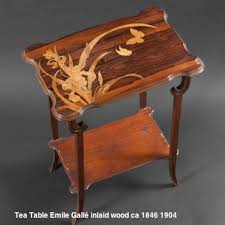
The Art Nouveau Movement was from 1890-1910. This movement was lead by Belgium and France but became popular throughout Europe. used nature's elements, flowers, birds, vines, insects, as inspiration. This period's designers and painters had an admiration for Japanese art and inspired many paintings.



https://www.youtube.com/watch?v=SZVli-rlPCI
The Art Nouveau Movement was from 1890-1910. This movement was lead by Belgium and France but became popular throughout Europe. used nature's elements, flowers, birds, vines, insects, as inspiration. This period's designers and painters had an admiration for Japanese art and inspired many paintings.
Characteristics of the movement include the rejection of the Victorian style, based on nature, the use of modern techniques, embracing manufacturing, electric lighting, and curvilinear forms.
Curved lines were dominant, "Whiplash" was the most visible motif. Decorative ornamentation consisted of abstract forms that were inspired by flowers, vines, shells, bird feathers, and insect wings.
Victor Horta was the most influential designer of the period. His designs included unique iron railings and hardware, large glass frames, and an asymmetrical facade.
Henry Van de Velde contributed sculptural and ergonomic furniture design including the armchair.
Hector Guimard was the most significant figure in Paris. He designed residential and street furniture which looked hand crafted but were made in factories.
Antoni Gaudi was a significant designer in Spain who continued using curves and unusual decorative details to create structures that resemble fantasy. He used glass, masony, ceramic tile, and wood seamlessly.
Previous Applications:
Modern Applications:
Subscribe to:
Posts (Atom)